Understanding Dorsal Vagal Shutdown: Numbness and Trauma (SNB192)
Summarized by VidSnap AI from Justin Sunseri on YouTube · Aug 31, 2026 · Watch the original
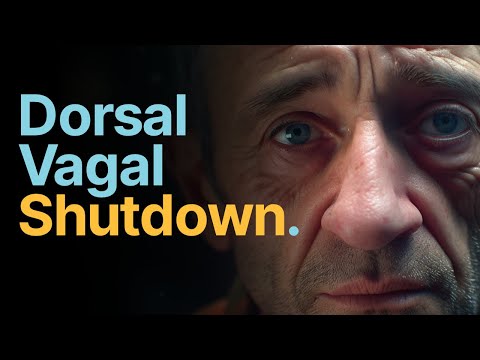
Understanding Dorsal Vagal Shutdown: From Collapse to Trauma
In this episode of Stuck Not Broken, therapist and coach Justin Sunseri explores dorsal vagal shutdown — a stress response marked by collapse, numbness, and disconnection. He explains how to recognize it, its links to trauma, and practical steps for recovery.
What Is Dorsal Vagal Shutdown?
Dorsal vagal shutdown is an autonomic nervous system response to overwhelming perceived life threat. Unlike freeze—tense stiffening—shutdown is a limp collapse: the body detects that fighting or fleeing is impossible and “plays dead” to survive. Physiological functions slow dramatically: heart rate and breathing drop, digestion is inhibited, and the body may feel numb or dissociated. Evolutionarily, this helped prey animals survive by discouraging predators.
Causes and Presentation
A range of factors can trigger shutdown:
- Acute physical or emotional trauma
- Chronic stress (financial, relational, occupational)
- Chronic illness
- Childhood attachment deficits
These factors often accumulate; repeated stressors can create a chronic, low-grade shutdown rather than a single collapse.
Outward signs vary. In acute cases, a person may visibly collapse. In chronic cases, shutdown is harder to detect: clients often describe numbness, dissociation, low energy, fatigue, and a sense of being alone in a dark room, limp and collapsed, with hopelessness, helplessness, sadness, or emotional numbness. Externally, such people tend to be quiet, avoid attention, and “go along” rather than cause problems. This passive presentation often causes shutdown to go unnoticed by teachers, family, and friends.
Shutdown and Trauma
Sunseri defines trauma not as the event itself but as its impact—including the impact of what did not happen. Trauma leaves a person stuck in a defensive polyvagal state, unable to reliably access the safety state. Two pathways are highlighted:
- Unmet attachment needs: Children must attach to caregivers to develop safety. When attachment is unavailable, the nervous system can default to shutdown.
- Overwhelming events: Threatening experiences can produce freeze, which combines shutdown’s immobility with locked-in fight/flight energy. That frozen sympathetic energy may later erupt as rage, panic, overwhelm, nightmares, or flashbacks.
Thus, both trauma pathways involve shutdown: directly through collapse or indirectly through the immobility that holds fight/flight energy in place.
Recovery and Practical Steps
Sunseri believes coming out of shutdown is possible; the nervous system is wired to move from collapse through sympathetic activation to safety. For humans, however, the process is slow and can be frightening. As shutdown lifts, fight/flight energy returns, and people often numb it through overeating, binge-watching, phone scrolling, or substances. These behaviors temporarily suppress the natural self-regulation process. Recovery requires moving beyond these behavioral adaptations and mindfully experiencing both shutdown and the energy emerging from it.
Key recommendations include:
- Co-regulation: Connection with a safe other who “beams” ventral vagal safety cues can help, but this may be hard for someone in shutdown. Deb Dana’s turtle analogy applies: do not knock or shake; sit patiently and radiate safety.
- Manipulate the environment: Because the nervous system constantly neurocepts cues of safety or danger, adjusting lighting, sound, smell, and proximity can increase safety cues.
- Create passive safety cues: Set up elements like music, silence, or dim lighting that provide a steady stream of safety without conscious effort.
- Mindfully experience safety: Rather than distracting yourself on a phone after creating a soothing environment, sit or lie immobile with curiosity and let the environment be felt.
- Allow immobility without judgment: In a safe environment, give yourself permission to be still, observe the experience, and let natural self-regulation emerge.
He also advises seeking professional help from a polyvagal-informed therapist if symptoms are severe or debilitating.
Resources Mentioned
Sunseri offers the Stuck Not Broken Total Access membership, with all his trauma recovery courses, a private community, twice-monthly Q&A meetups, forums, and weekly insight videos. A free 3-Day Polyvagal State Challenge is available via his email list. Both are linked at justinlmft.com.
Key Takeaway
Dorsal vagal shutdown is not a character flaw or a life sentence. It is an adaptive survival response that becomes stuck, and it can be gently unwound through patience, safety, and mindful attention. The path involves small, tolerable steps: building safety cues in the environment, allowing immobility without judgment, and gradually welcoming the return of energy and connection. The process is not quick; it is a slow, gradual emergence, done little by little.
Want to summarize your own videos?
Try VidSnap free