What Is the Fawning Trauma Response?
Summarized by VidSnap AI from Ingrid Clayton, PhD on YouTube · Sep 3, 2026 · Watch the original
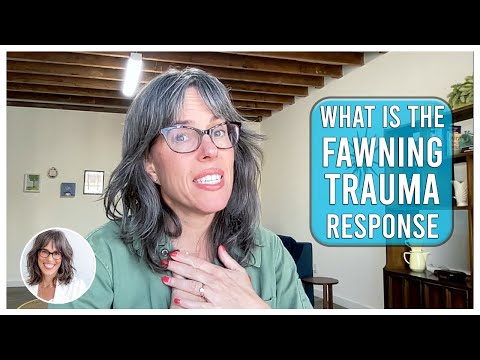
The Fawning Trauma Response: Survival Through Self-Abandonment
This video features Dr. Ingrid Clayton, a clinical psychologist and trauma survivor, who explores the fawning trauma response—a concept coined by Pete Walker. She distinguishes it from the more stigmatized label of codependency, framing it not as a character flaw or conscious choice, but as an instinctual, survival-based strategy rooted in complex trauma. The discussion centers on how fawning manifests as a chronic prioritization of others' needs to secure safety and connection, often at the devastating cost of one's own identity and well-being.
Reframing Codependency as a Survival Strategy
Dr. Clayton begins by explaining her personal difficulty relating to the language of codependency. She notes that the term has become heavily stigmatized, often carrying an implicit judgment that suggests one should simply "put yourself first," as if it were an easy choice. This perspective overlooks the deep-seated, non-conscious nature of the behavior. Furthermore, she points out that the word "codependency" originates from the chemical dependency recovery world, tethering it to addiction contexts, even though the behavior can manifest in any relational system.
For Dr. Clayton, learning about the fawning trauma response was transformative because it placed this behavior in the context of survival. It reframed her actions from a shameful choice to an instinctual response to threat. She states, "I've been abandoning myself in order to seek safety," which allowed her to finally make sense of her own experiences. She also cautions against pathologizing all forms of dependency, reminding viewers that humans are "hardwired for relationship." Our nervous systems co-regulate, and mutual dependency is a natural, healthy part of the human experience. Fawning, however, is distinct: it is a fear-based response where one person's needs are consistently placed above another's out of a deep-seated belief that their own survival depends on the other person's well-being.
The Core Dynamics of Fawning
The fawning response is characterized by a complete surrender of personal boundaries. It involves a lack of assertiveness, an overwhelming urge to appease, and over-accommodation, sometimes leading to complete submission, even to someone who has caused harm. This paradoxically puts the individual in harm's way even as they attempt to keep themselves safe.
- Mirroring and Appeasement: Fawning is a mirroring of others' perceived desires or expectations to defuse conflict and find safety.
- Boundary Erosion: There is a fundamental absence of boundaries, as the individual's primary focus is on the other person's state.
- The Hopeful Fantasy: Embedded within fawning is a powerful fantasy that the other person will eventually "rise above," get their life together, and reciprocate the care. This hope fuels the behavior, leading the individual to interpret a lack of reciprocity not as a sign to change course, but as a signal to try harder.
Origins in Complex Trauma and Family Systems
Fawning is a common response to complex trauma, frequently arising in family systems where there was at least one narcissistic parent, or in environments characterized by addiction, dysfunction, or neglect. In these settings, a child learns that safety and connection are only attainable by privileging the parent's needs and emotional state above their own. This becomes a deeply habituated pattern.
The tricky aspect is that this response becomes "stuck" or chronically activated. The individual doesn't just employ this strategy when there is a real threat; they use it all the time, even when it's unnecessary. They become so accustomed to not stopping to feel and own their own sense of self that it feels nearly impossible to backpedal into their own identity and ask, "What do I feel? What do I think? What do I need?"
The Link to Repetition Compulsion and Low Self-Worth
Dr. Clayton connects fawning to repetition compulsion and trauma reenactment. Because safety was originally found in exploitative, neglectful, or abusive dynamics, the individual's nervous system equates these harmful relationships with a form of safety and connection. As they move through life, they may be unconsciously drawn to similar dynamics, feeling a sense of familiarity and "knowing what to do" when they encounter unavailable or narcissistic partners.
This pattern is deeply intertwined with a profound sense of low self-worth. If an individual's existence feels contingent on being seen by someone who is fundamentally unable to see them, it perpetuates the belief that they are not worthy of love or attention. The response is to try even harder to be of service, hoping to finally earn the recognition and care they crave.
"If I don't really exist unless you see me, and yet what we're dealing with is someone who has an inability to really see me... it just perpetuates that idea that I'm not worth it."
The Path to Recovery: Turning the Gaze Inward
Recovery from a fawning response requires a conscious and deliberate shift. It involves stopping the "perpetual gaze" outward—toward the other person as the one who will fix, solve, or validate—and turning that gaze back toward oneself. This is the difficult work of choosing yourself, even if you have never been chosen before.
Dr. Clayton shares her personal struggle with the concept of self-love, admitting it initially felt "disgusting" in her body and like a "placebo." However, she emphasizes that through consistent behavioral action—setting healthy boundaries, walking away from what isn't working, and choosing herself—she gained real-time, felt experience in her body that it is enough. This practice is not just conceptual; it has tangible effects:
- Changes Internal Chemistry: Choosing oneself alters one's internal state and relationship with the self.
- Changes Attraction Patterns: As one becomes more available to oneself, the attraction to unavailable or narcissistic dynamics in others diminishes.
- Reclaims Self-Worth: It provides experiential proof of one's own value, countering the old, ingrained beliefs.
Dr. Clayton clarifies that fawning can superficially look like kindness or altruism, but it is neither if it comes at the cost of abandoning oneself. True compassion must include self-compassion.
Key Takeaway
The fawning trauma response is a deeply ingrained survival strategy born from complex trauma, where an individual learns to abandon their own needs to secure safety and connection with others. It is not a conscious choice or a simple character flaw, but a protective mechanism that ultimately perpetuates low self-worth and harmful relationship patterns. Recovery is not about judgment but about understanding this response with reverence for its protective intent, and then consciously and behaviorally turning one's focus inward. The path forward involves the challenging, painful, and ultimately powerful work of choosing oneself, setting boundaries, and building a felt sense of self-worth that is not dependent on another person's validation.
Want to summarize your own videos?
Try VidSnap free