How Great Leaders Inspire Action | Simon Sinek | TED
Summarized by VidSnap AI from TED on YouTube · Aug 21, 2026 · Watch the original
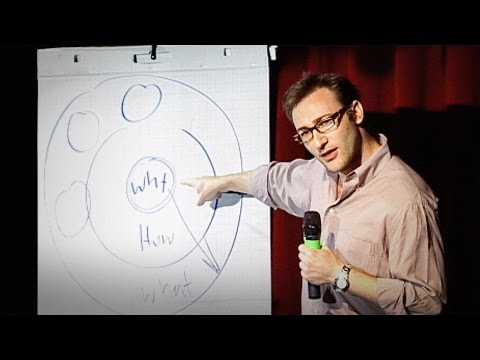
Start with Why: The Golden Circle of Inspiring Leadership
Simon Sinek presents his foundational "Golden Circle" concept to explain why leaders like Apple, Martin Luther King Jr., and the Wright brothers consistently inspire action while others fail. He argues that the pattern is the complete opposite of conventional thinking, and the secret lies not in what they do, but in why they do it.
The Golden Circle Framework
- What: Every organization knows what they do (products, services).
- How: Some know how they do it (differentiated value proposition or proprietary process).
- Why: Very few know their purpose, cause, or belief—profit is a result, not a Why.
Most people communicate from the outside in (What → How → Why), which is logical but uninspiring. Inspired leaders communicate from the inside out (Why → How → What), tapping into deeper motivations.
"People don't buy what you do; they buy why you do it."
The Biological Basis
This is grounded in biology. The neocortex handles rational thought and language, corresponding to "What." The limbic brain controls feelings, trust, loyalty, and all decision-making, but has no capacity for language. Communicating "Why" speaks directly to the decision-making brain, allowing people to rationalize the "What" afterward—this is where "gut decisions" come from. This explains why facts and figures alone rarely drive behavior.
Case Studies: Purpose vs. Result
- Wright Brothers vs. Langley: Langley had Harvard, the Smithsonian, $50,000, and top talent, but sought riches and fame. The Wrights had no money or education, but were driven by a cause to change the world. Their team worked with "blood, sweat, and tears," leading to success.
- TiVo's Failure: Despite superior quality and funding, TiVo marketed its features ("What") and failed commercially. Had they started with the belief of control, they might have succeeded.
- MLK's Success: Dr. King shared a belief ("I have a dream"), not a 12-point plan. 250,000 people showed up for themselves, driven by their own beliefs, not for him.
The Law of Diffusion of Innovation
Mass-market success requires crossing a tipping point of 15-18% market penetration. The first 2.5% (innovators) and 13.5% (early adopters) make intuitive, belief-driven decisions. This is what Jeffrey Moore calls "Crossing the Chasm." The goal is to attract those who believe what you believe, not just those who need what you have.
Key Takeaway
Leaders hold positions of power, but those who lead inspire us. By starting with "Why," organizations attract loyal customers and employees who work for passion, not just paychecks, enabling them to defy assumptions and change the course of their industries.
Want to summarize your own videos?
Try VidSnap free